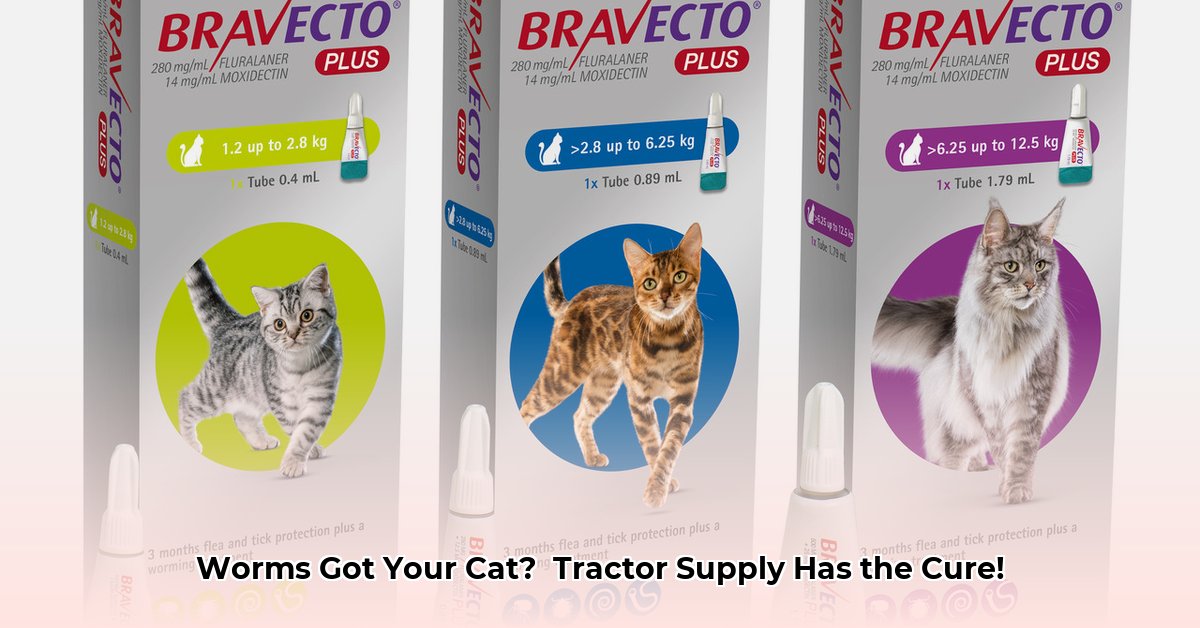
Worried about intestinal parasites in your cat? Choosing the right cat wormer can be confusing, but this guide simplifies the process, helping you protect your feline friend. We'll explore the types of worms affecting cats, the dewormers available at Tractor Supply, and how to use them safely and effectively. Remember, a veterinarian's diagnosis is always crucial before starting any treatment. For more information on cat food options, check out this helpful resource.
Understanding Common Cat Worms
Cats can be affected by several internal parasites, each requiring a specific approach to treatment. The most common include:
- Roundworms: These are often passed from mother to kitten or picked up from contaminated soil. They can cause vomiting, diarrhea, and weight loss.
- Hookworms: These worms attach to the intestinal wall, feeding on blood and potentially causing anemia. Symptoms include pale gums, lethargy, and bloody diarrhea.
- Tapeworms: These are usually acquired through fleas or by eating infected prey. Visible segments (like grains of rice) in your cat's stool are a key indicator.
- Whipworms: These live in the large intestine and can cause bloody diarrhea, weight loss, and lethargy.
Choosing the Right Cat Dewormer at Tractor Supply
Tractor Supply offers various deworming products, but selecting the correct one depends entirely on the type of worm infecting your cat. This is where your veterinarian plays a vital role.
A fecal examination, a simple test analyzing your cat's stool, is crucial for accurate parasite identification. Your veterinarian will then recommend the most effective wormer and dosage based on your cat's specific needs and weight. Never attempt to guess; incorrect treatment can be ineffective or even harmful to your cat.
Different Types of Cat Dewormers: A Simplified Overview
Tractor Supply likely carries various dewormers with different active ingredients. Some are broad-spectrum, targeting multiple parasite types, while others are specific to a single type of worm. The following table provides a simplified overview; always consult your veterinarian for personalized advice.
| Dewormer Type | Active Ingredient(s) (Examples) | Targets | Usual Administration Method | Important Note |
|---|---|---|---|---|
| Broad-spectrum wormer | Milbemycin oxime, Praziquantel | Roundworms, Hookworms, Tapeworms | Oral (tablet, chewable) | Effective against a wider range of worm types. |
| Tapeworm-specific wormer | Praziquantel | Tapeworms | Oral (tablet) | Only effective against tapeworms. |
| Roundworm/Hookworm wormer | Pyrantel Pamoate | Roundworms, Hookworms | Oral (liquid, paste, tablet) | Often effective against these common worm types. |
Important: This information is for general knowledge only. The availability and specific formulations of dewormers at Tractor Supply may vary.
Administering Your Cat's Dewormer: A Step-by-Step Guide
Once your vet has prescribed a dewormer, follow their instructions precisely! Accurate dosage is critical for effectiveness and your cat's safety. Oral medications are usually given directly or hidden in food. Always check the expiration date before administering any medication. Expired dewormers may be ineffective or harmful.
Step 1: Veterinary Consultation: Schedule an appointment for a fecal examination to identify the parasite.
Step 2: Medication Prescription: Your vet will prescribe the appropriate dewormer and dosage based on your cat's diagnosis, weight, and overall health.
Step 3: Safe Administration: Follow your vet’s instructions carefully regarding dosage and administration method.
Step 4: Monitoring: Keep an eye on your cat for any adverse reactions after administering the medication. Contact your vet if you notice anything unusual.
Preventing Worm Infestations: Proactive Measures
Preventing worm infestations is easier than treating them. Regular deworming, as recommended by your veterinarian, is crucial. Beyond medication, proper hygiene significantly reduces your cat's risk of infection:
- Daily Litter Box Cleaning: This minimizes exposure to parasite eggs.
- Regular Flea Control: Fleas can transmit tapeworms; treat your cat for fleas regularly.
- Yard Maintenance: Keep your yard clean, especially areas where your cat spends time.
"Regular preventative care is the best approach," says Dr. Emily Carter, DVM, from the American Veterinary Medical Association. "This minimizes the risk of severe infections and often significantly reduces the cost of treatment in the long run."
Recognizing Warning Signs: When to See a Vet
Contact your veterinarian immediately if you notice any of these signs, which can indicate a worm infestation:
- Vomiting
- Diarrhea
- Lethargy
- Weight loss
- Dull coat
- Straining to defecate
Early intervention is key to effective treatment and preventing severe health complications. A healthy cat is a happy cat!
Key Considerations for Choosing a Cat Dewormer
- Accurate Parasite Identification: A veterinary diagnosis is essential for effective treatment.
- Dewormer Type: Choose a dewormer tailored to the specific parasite identified by your vet.
- Administration Method: Consider your cat's temperament and choose a medication easy to administer.
- Cost: Over-the-counter dewormers are often cheaper but may not be as effective as prescription options.
- Preventative Care: Regular deworming and good hygiene are crucial for preventing infestations.
This guide offers valuable information, but it isn’t a substitute for professional veterinary advice. Always consult your veterinarian for a proper diagnosis and treatment plan for your cat.